Crane Creek shipyard and the WWII submarine-chaser contracts
Wooden 110-foot submarine chasers built in part on Crane Creek between 1942 and 1944. Here's the contract trail, the construction reality, and what the war did to Melbourne's small-boat economy.
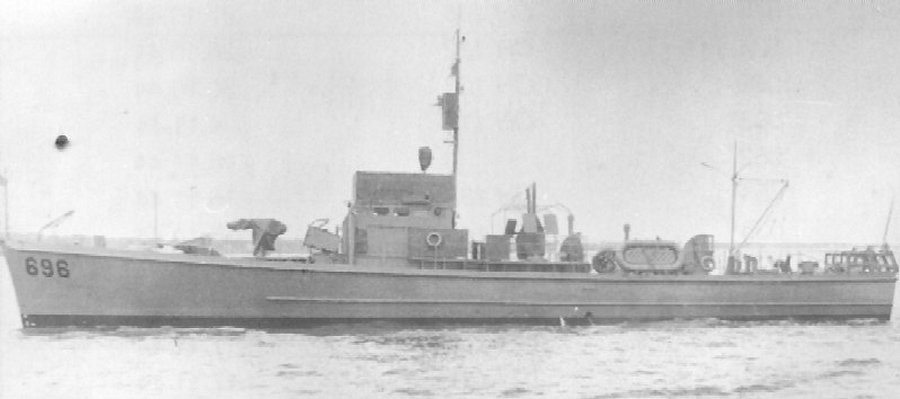
Crane Creek’s small boatyards did war work between 1942 and 1944. The Marsh family yard, the most consistent operator on the creek through the first half of the twentieth century, took US Navy subcontracts to fabricate hulls and decking for SC-497 class submarine chasers, the standard 110-foot wooden patrol craft the Navy used to escort Atlantic coastal convoys and to hunt U-boats in shallow water. The contracts were modest in dollars and the Marsh yard wasn’t large enough to launch a finished 110-foot vessel. What Crane Creek did was supply hull components and decking that were trucked north to larger St. Johns River yards for final assembly. The war contracts kept the yard solvent through 1944 and put Melbourne onto the federal procurement system for the first time.
What an SC-497 was
The SC-497 class submarine chaser was a wooden-hulled, twin-engine, 110-foot patrol vessel built in large numbers (438 hulls completed) by the Navy between 1941 and 1944 to address an acute shortage of coastal escort craft after the U-boat campaign in the western Atlantic. The hulls were wood because the Navy needed steel for larger ships and because wood-hulled boats had real anti-mine advantages. The SC-497s carried sonar, depth charges, a 40mm Bofors gun, machine guns, and a crew of about 25.
The class was small enough that they could be built quickly by yards that had no previous warship experience. The Navy contracted with a network of about 35 yards along the East Coast and Gulf, ranging from major shipbuilders in Maine and Massachusetts to small commercial boatyards in Florida and the Carolinas. The Marsh yard on Crane Creek was one of the smaller participants in this network.
What Crane Creek actually built
The Marsh yard couldn’t launch a 110-foot vessel into Crane Creek. The creek’s mouth at low tide is six to eight feet deep; an SC-497 drew about six feet at displacement and needed deeper water to maneuver out, especially during the launching sequence. The yard’s marine railway was rated for vessels up to about 50 feet.
What the yard did instead: hull frame components, decking, and superstructure parts. Workers fabricated cut-to-spec lumber assemblies (frames, planking sections, deck beams) that were then trucked about 130 miles north to larger yards on the St. Johns River, where final hull assembly happened. The arrangement was unusual but it fit a wartime pattern: smaller yards subcontracted to bigger ones for components, the bigger yards launched the finished vessels.
Total Marsh yard war contracts: approximately $180,000 between 1942 and 1944 in then-current dollars (about $3 million in 2026 dollars). Not a large number for the Navy, but a substantial number for a small Brevard County boatyard. Employment at the yard rose from a typical six to eight workers in 1940 to about thirty workers at peak in 1943.
What it looked like
Wartime photos of the yard show stacks of cypress and oak lumber in the yard, workers framing hull components on sawhorses, and trucks at the loading area on Highway 1. The work was outdoor, weather-dependent, and exhausting. Workers were a mix of Marsh family members, prewar boatyard workers who’d stayed on, and new hires drawn from the Melbourne workforce as wartime employment expanded. Several Black workers were on the payroll, mostly in framing and finishing roles; this was unusual in Brevard’s segregated wartime economy but consistent with the Navy’s wartime push for integrated workforce participation in defense industries.
The yard worked seven days a week through most of 1943. Air-raid drills were taken seriously even though Melbourne was far enough from the U-boat lanes that an attack was unlikely. The Navy supplied technical specifications, construction templates, and inspection visits. A Navy resident inspector spent two days a week at the yard.
Other Brevard wartime contributors
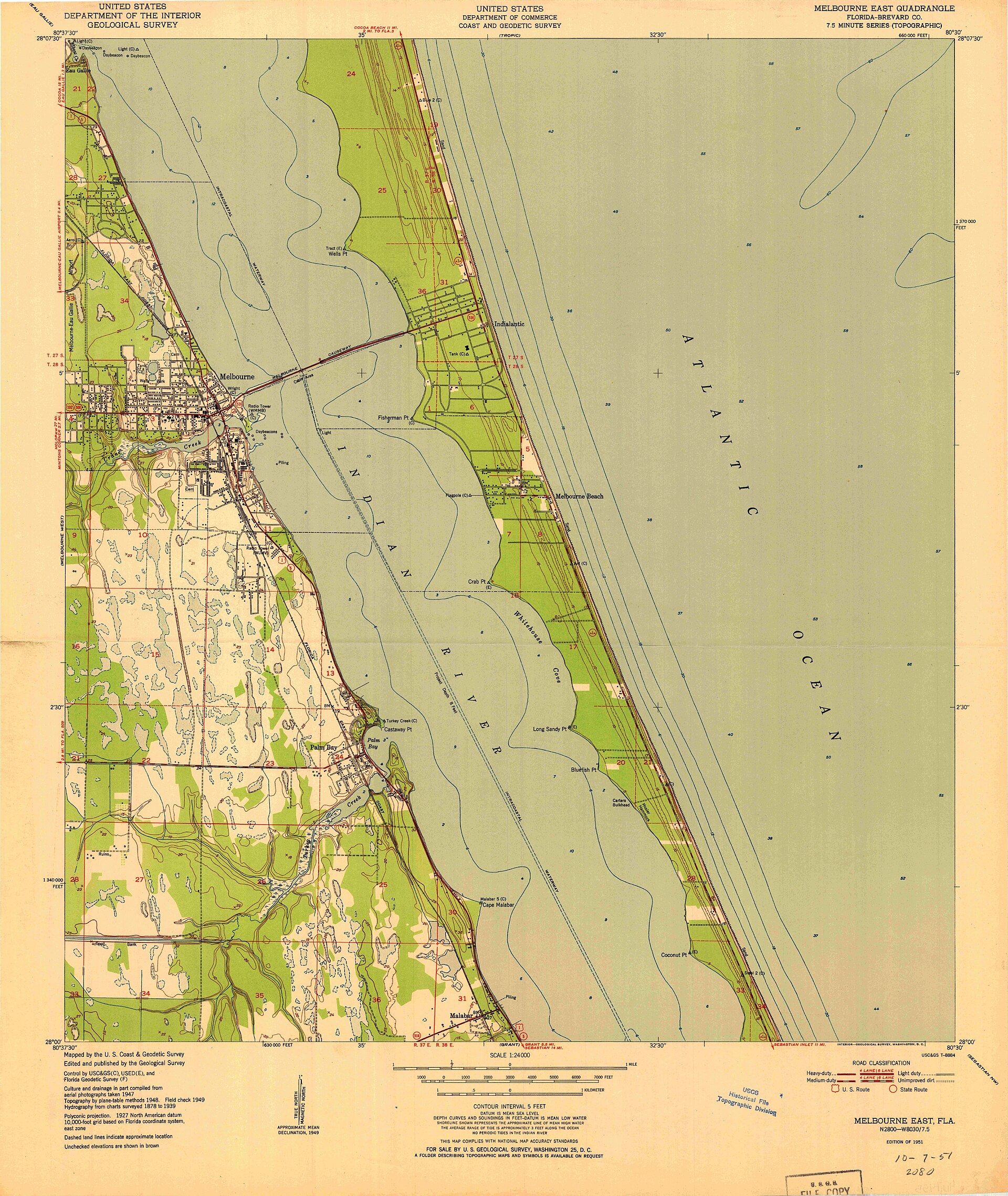
Crane Creek wasn’t alone. The larger story of Brevard’s wartime industry is dominated by the activation of Naval Air Station Banana River (now Patrick Space Force Base) for anti-submarine patrol operations, and by the brief activation of NAS Melbourne at what’s now the Orlando Melbourne International Airport. Both were major employment centers through 1944 and 1945.
The Marsh yard’s subchaser work was a small piece of a larger pattern. Other Brevard contributors included the Eau Gallie yards (which did some net-tender and patrol-boat work), small Cocoa Beach operations, and the substantial Banana River seaplane patrol squadrons. Total Brevard County wartime federal employment is hard to reconstruct because much of the workforce was civilian temporary and not fully captured in census records, but estimates run to 5,000+ at peak in 1943.
After the war
The Marsh yard ended its Navy contracts in early 1944 as the SC-497 program wound down (the Navy was already shifting to faster steel-hulled patrol craft for late-war work). The yard transitioned back to commercial fishing boats and pleasure craft. Marsh’s grandson kept the yard going through 1958, when he retired and no successor took over the operation.
The infrastructure of the wartime yard is largely gone. The main building was demolished in the 1960s. The marine railway was disassembled in 1972. The site is now part of the Melbourne Civic Center / Crane Creek Promenade complex. There is no historical marker indicating the subchaser work.
A small archival mention of the yard’s wartime contracts exists in the US Navy Bureau of Ships construction records at the National Archives in College Park, Maryland. Cross-referenced contract numbers identify the Marsh yard as a tier-two subcontractor on at least three SC-497 hulls. The records do not name the specific hulls (the Navy didn’t trace components that finely) but the contract values match the Marsh yard’s recorded receipts.
Why it mattered
The Marsh yard’s subchaser work was not large in absolute terms. It mattered for three reasons.
First, it put Melbourne on the federal procurement system. Once a small business had successfully delivered to a Navy contract, the relationship survived. The same procurement pathways that ran through Crane Creek in 1943 ran through Brevard’s larger postwar defense contractors (Radiation Inc., later Harris) in the 1950s and 1960s. The institutional memory and the federal contracting expertise transferred.
Second, it broke segregation patterns slightly in Brevard. The defense workforce was integrated under wartime federal pressure (Executive Order 8802, the 1941 Fair Employment Practices order). The Marsh yard’s integrated workforce was a small example of a larger pattern that would be hard to roll back fully after the war.
Third, it kept the working waterfront alive on Crane Creek through what would otherwise have been a brutal economic stretch. Citrus had been damaged by prewar freezes. Tourism was effectively shut down by gas rationing. Without the federal contracts, the Marsh yard probably closes in 1942 or 1943. The yard survived because of subchasers, and the survival kept the waterfront’s commercial identity alive into the postwar period.
The yard’s gone now. The story isn’t in any Brevard museum. It deserves to be.
Sources
- Naval History and Heritage Command, “Submarine Chasers: SC-497 Class,” accessed 2026-01-14. https://www.history.navy.mil/research/library/online-reading-room/title-list-alphabetically/s/submarine-chasers.html
- US Navy Bureau of Ships, construction contracts 1942-1944 record group 19, NARA College Park MD, accessed 2026-01-14. https://www.archives.gov/research/military/navy
- Florida Memory Project, WWII Brevard County photographs and oral history collection, accessed 2026-01-14. https://www.floridamemory.com/
- Executive Order 8802 (1941) and Fair Employment Practices Commission records.
- US Naval Air Station Melbourne operational history, accessed 2026-01-14.
Further Reading
As an Amazon Associate we earn from qualifying purchases.