Florida Institute of Technology, founded 1958 for NASA's night-school engineers
Brevard Engineering College opened in a Quonset hut in 1958 to teach evening classes to the engineers working at Cape Canaveral. Sixty-plus years later it's a research university with 9,000 students.
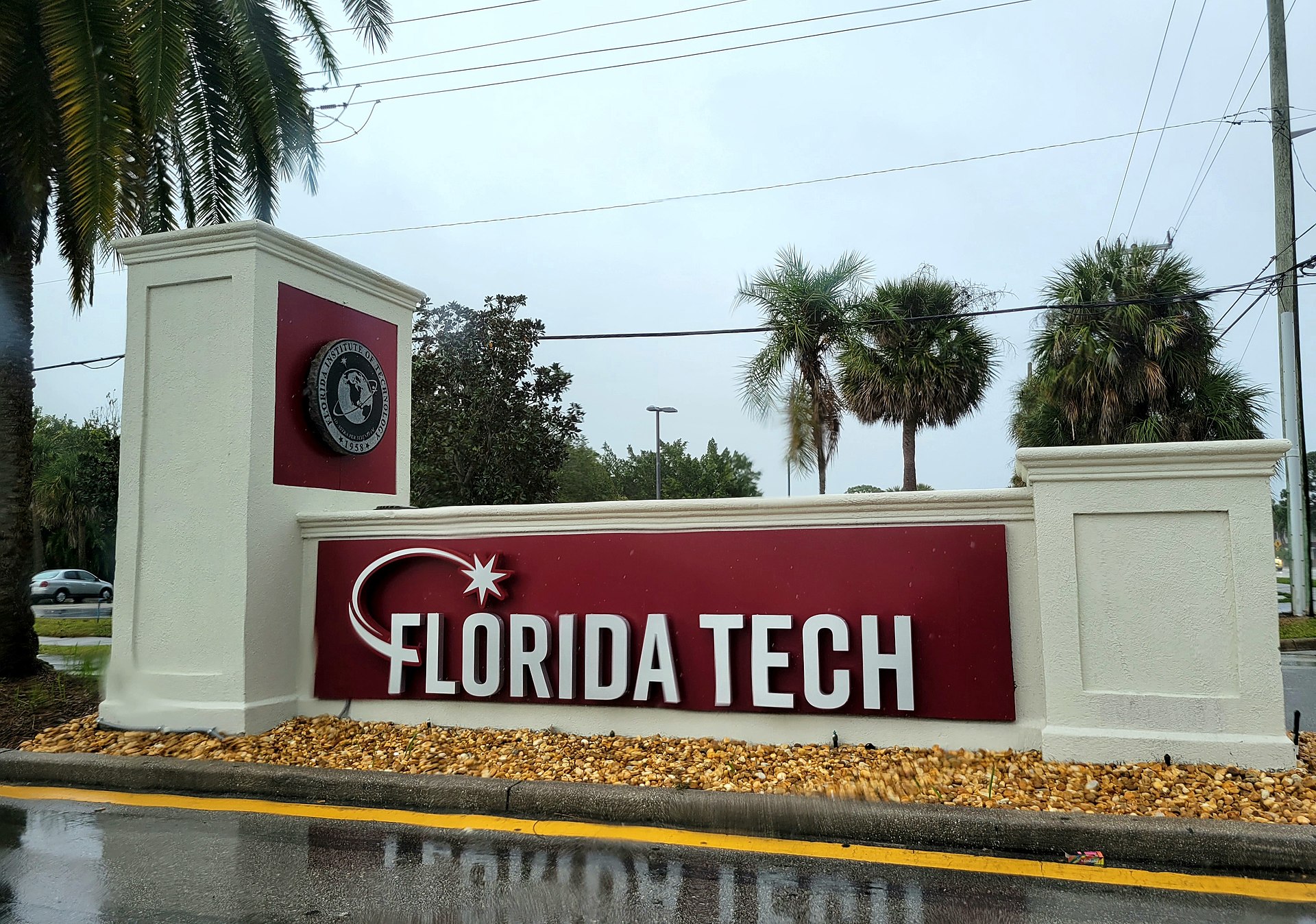
Florida Institute of Technology was founded in September 1958 by a Cape Canaveral physicist named Jerome P. Keuper to teach graduate-level engineering and physics classes in the evening to the federal workforce of the missile program. The first classes met in a Quonset hut at Patrick Air Force Base with 154 students. The institution was called Brevard Engineering College. Tuition was $15 per credit hour. The first commencement, in 1962, awarded eleven master’s degrees.
By 2026 the institution has 9,000 students, a 130-acre main campus south of downtown Melbourne, a College of Aeronautics with its own runway, and roughly $50 million a year in sponsored research. The path from Quonset hut to research university is one of the most consequential transitions in Brevard County’s modern history.
Jerome Keuper
Keuper was born in 1921 in St. Louis, took a PhD in physics from the University of Virginia, and went to work for the Air Force Eastern Test Range at Patrick AFB in 1955. By 1957 he was a senior civilian scientist at the base, frustrated by what he saw as the absence of any post-secondary education infrastructure within commuting distance of the Cape. The nearest engineering graduate programs were at the University of Florida in Gainesville (160 miles) and the University of Miami (200 miles). A Cape Canaveral engineer who wanted a master’s degree was looking at a weekly commute or a relocation.
Keuper’s response, drafted with two colleagues over the summer of 1958, was a proposal for a privately chartered evening college. The Air Force would provide classroom space at no cost. Keuper and a small founding faculty would teach on top of their day jobs. Students would be working engineers and scientists who paid out of pocket or used the GI Bill. The Florida Department of Education granted a provisional charter in September 1958.
The first class had 154 students. It was held in a Quonset hut. The faculty had four members, including Keuper. The curriculum was electrical engineering, mechanical engineering, and physics at the master’s level.
The 1960s and the move to Melbourne
By 1961 the school had outgrown the Quonset hut. The Air Force, increasingly worried about liability for a private institution operating on a federal facility, asked the college to find off-base space. The college incorporated formally as Brevard Engineering College and bought a 50-acre tract on Country Club Road in Melbourne (south of downtown, west of US-1) for $50,000.
Construction of the first permanent classroom building began 1962. It opened 1963. The campus grew rapidly through the rest of the decade, funded by a combination of tuition, federal research grants, and a fundraising drive that successfully tapped the rapidly expanding Brevard aerospace industry.
The institution was renamed Florida Institute of Technology in 1966 to reflect its broader academic ambitions. It added undergraduate programs the same year. It became a doctoral-granting institution in 1969 (first PhD in 1972).
The Apollo years
The 1960s were good to FIT. The Apollo program’s peak employment at Kennedy Space Center and the Cape ran to roughly 26,000 workers in 1968, and a significant fraction of those workers were taking FIT courses. Enrollment grew from 600 in 1963 to 4,000 by 1972. The faculty grew correspondingly. Research grants from NASA, the Air Force, and the Navy flowed in through the late 1960s.
The post-Apollo cutbacks hurt. NASA contractor employment at the Cape dropped from 26,000 in 1968 to about 13,000 by 1974. FIT lost about a third of its enrollment in the same window. The institution survived by aggressively recruiting traditional undergraduate students nationally and internationally, by adding non-engineering programs (business, behavioral science, marine biology), and by leveraging Brevard’s recovery in the late 1970s as the Space Shuttle program ramped up.
What FIT is now
A private research university. Classified as R2 (doctoral, high research activity) by the Carnegie Classification. About 4,500 undergraduates and 4,500 graduate students. Strong programs in aerospace engineering, electrical engineering, oceanography, marine biology, computer science, and atmospheric science. The College of Aeronautics operates its own fleet of training aircraft at Melbourne International Airport.
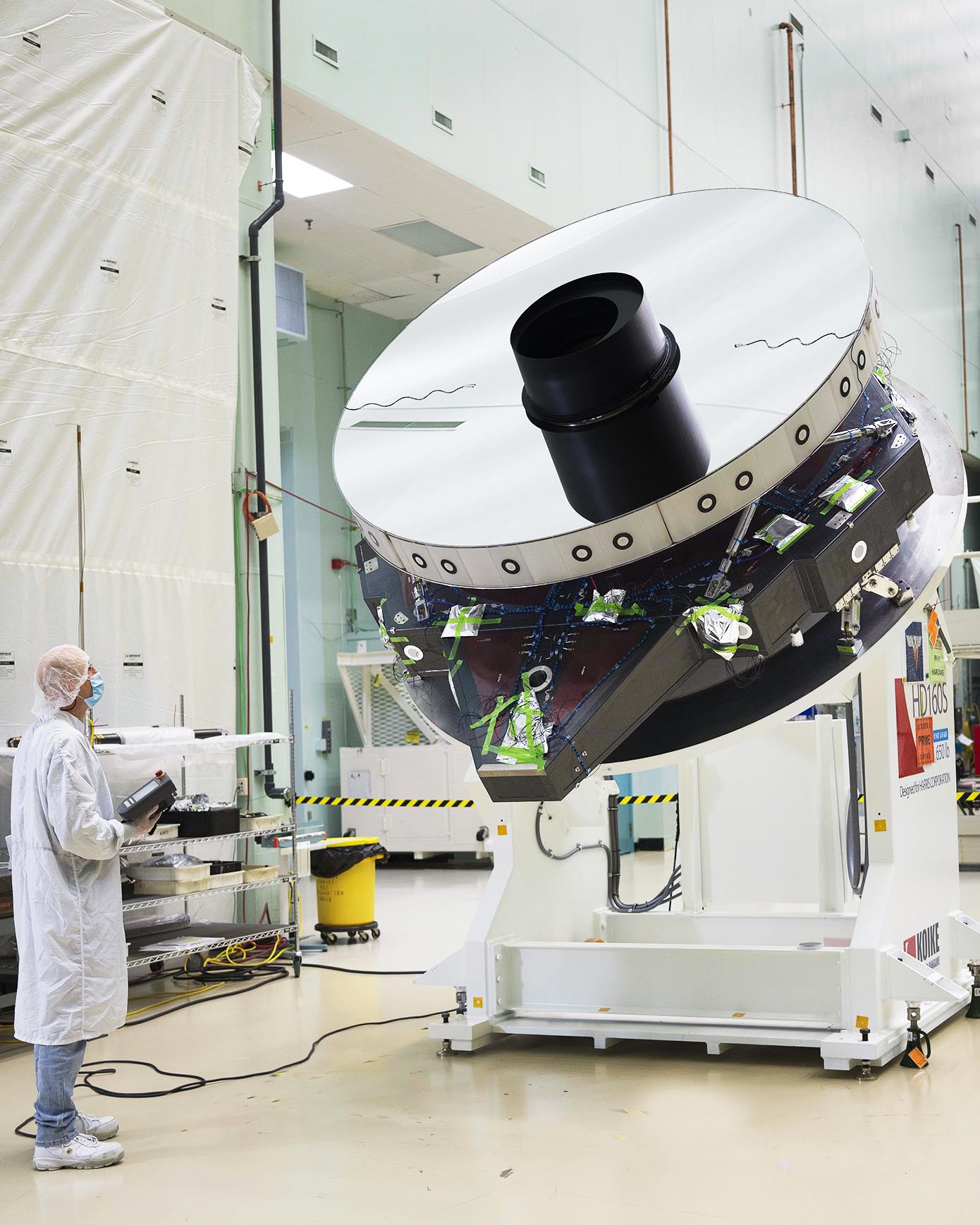
Research expenditures are about $50 million annually, modest by R1 standards but substantial for an institution of its size, with concentrations in marine sciences (Indian River Lagoon programs), aerospace, and oceanography. The Harris Center for Science and Engineering, opened 2014, is a major undergraduate teaching facility funded by what was then Harris Corp.
The campus has expanded to 130 acres. Roughly 60 buildings. A botanical garden (the Botanical Garden at Florida Tech, opened 1990, focused on Florida natives and tropical specimens). A modest endowment of about $90 million (2024 figures), which is small for a private university but adequate to keep operations stable.
Why FIT mattered to Melbourne
Three things.
Workforce. FIT graduates stayed. The university produced a steady stream of engineers who took jobs at Harris, Northrop, Rockwell, and the various NASA contractors. By the 1990s most of the engineering workforce in the L3Harris corridor either had an FIT degree or worked alongside someone who did. The institution functioned as a regional engineering workforce pipeline.
Cultural anchor. The campus brought students, faculty, performances, lectures, and a younger demographic to a city that would otherwise have skewed entirely retiree and aerospace-engineer. Melbourne’s downtown revival in the 2000s and 2010s was significantly underwritten by FIT’s student population.
Research links to local industry. Harris Corp. and FIT had collaborative research programs from the 1970s onward, formalized in joint laboratories and faculty cross-appointments. When Harris merged with L3 in 2019 to form L3Harris, the FIT research relationship was one of the assets that made the merger location-specific to Melbourne instead of Harris’s nominal headquarters relocating.
The Keuper legacy
Keuper served as president from 1958 through 1986. He died in 1995. The Keuper Building, an administrative center on the FIT campus, is named for him. His original Quonset hut from Patrick AFB was preserved and is now an exhibit on campus. Worth seeing if you tour FIT and can find it. (It’s tucked behind the engineering complex.)
The institution Keuper built is the rare American university founded after 1950 that has both grown substantially and stayed close to its founding mission. It’s still primarily an engineering and physical-sciences school. It’s still primarily oriented to producing graduates who go to work in the aerospace and tech industries. The mission statement hasn’t drifted.
For Melbourne, FIT is the single most important non-corporate institution founded after the Hectors arrived. It deserves more attention from the city’s own marketing than it gets.
Sources
- Florida Tech, “Our History,” accessed 2026-01-10. https://www.fit.edu/about/our-history/
- Florida Tech Evans Library, institutional archives, accessed 2026-01-10. https://www.fit.edu/library/
- NASA History Office, “Kennedy Space Center workforce statistics,” 1968-1974, accessed 2026-01-10. https://www.nasa.gov/history/
- Carnegie Classification of Institutions of Higher Education, 2025 listing for Florida Institute of Technology.
- Florida Department of Education, college charter records, 1958.
- Florida Memory Project, photographs of Brevard Engineering College and FIT in the 1960s, accessed 2026-01-10. https://www.floridamemory.com/
Further Reading
As an Amazon Associate we earn from qualifying purchases.