Melbourne Village, the 1946 planned community that survived
A decentralist utopian project founded in 1946 by Ralph Borsodi's followers, Melbourne Village still exists as a separately incorporated town inside the urbanized south Brevard county. Here's how it happened and what it became.
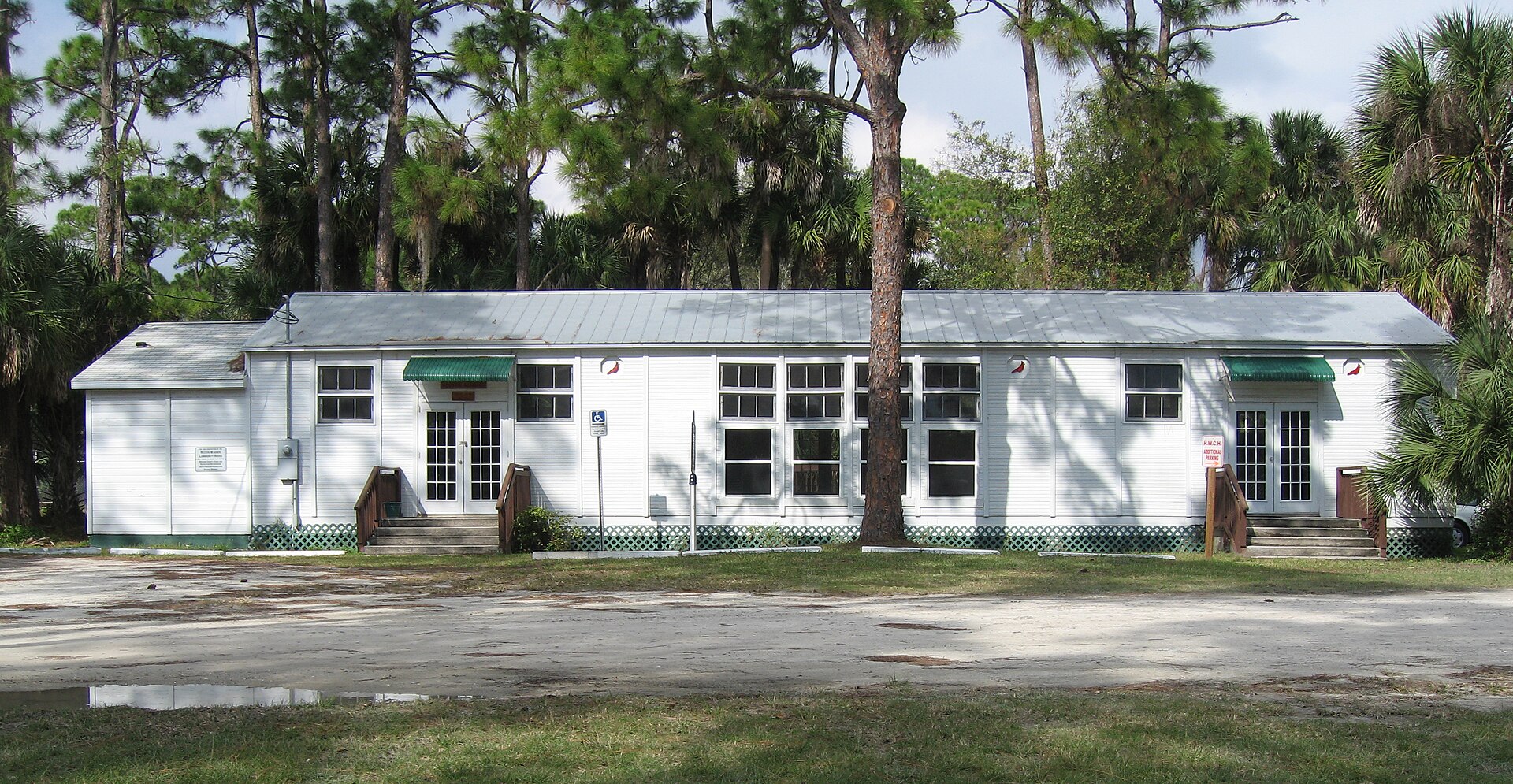
Melbourne Village is a separately incorporated town of about 700 people inside the urbanized footprint of south Brevard County, surrounded on three sides by the City of Melbourne. It was founded in 1946 as a decentralist planned community by followers of the social philosopher Ralph Borsodi, who advocated for low-density homesteads on shared land with small-scale food production and craft-based economies. Eighty years later the original utopian project has not succeeded on its own terms (most residents work conventional jobs in greater Melbourne) but the community has survived as a distinctive low-density wooded enclave in a region that has otherwise been comprehensively suburbanized.
The story is interesting because Melbourne Village is one of the few American intentional communities of the postwar era that’s still on the original land, still self-governing, and still recognizable as the thing the founders intended.
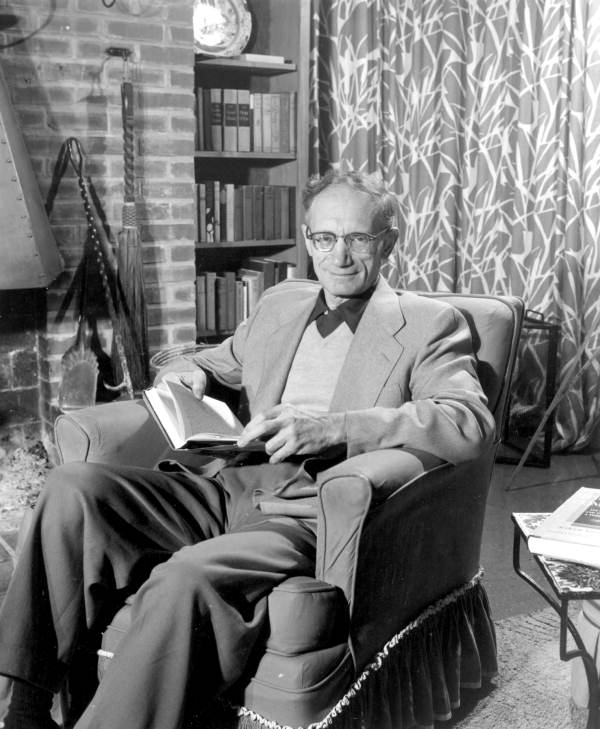
Ralph Borsodi
Borsodi (1886-1977) was an American social theorist who advocated decentralism: small, self-sufficient communities of single-family homesteads producing much of their own food and goods through cooperatives. He was hostile to industrial mass production, urban concentration, and the modern wage economy. He founded the School of Living in 1936 in upstate New York, where he taught practical homesteading and economic philosophy.
Borsodi was not a utopian in the Brook Farm or Oneida sense; he wasn’t proposing communal property or experimental social arrangements. He was proposing what he called “the decentralist homestead”: individual families on small private plots, with the community organized as a land trust to ensure no member could sell out to a developer and break the project. The land trust mechanism, called the “Independence Foundation” model, would own the underlying land and lease it to homesteaders on 99-year inheritable leases.
The model was tested at Bryn Gweled Homesteads in Pennsylvania (1940) and at several other locations in the Northeast through the early 1940s. Melbourne Village was the southern flagship.
The land trust mechanism
The land trust is the structural feature that made Melbourne Village durable. Conventional homeowners’ association covenants degrade over time. Borsodi’s mechanism was different: the underlying land stayed in the foundation’s hands, and homesteaders held 99-year leases. The leases were inheritable and transferable but only with foundation approval. The foundation could refuse a transfer that violated community standards (e.g., a buyer who wanted to subdivide a lot or build oversized).
The system has held. As of 2026 the foundation still controls the underlying land. Lease transfers continue to require foundation approval. The model has been studied by community-land-trust advocates as one of the rare American intentional-community land arrangements that has survived three generations of demographic turnover.
The three women who actually founded it
Borsodi gets top billing in most Melbourne Village writeups, and he was the philosophical anchor. But he was not on the ground at the start. The actual founding work was done by three women who came south from Dayton, Ohio, in 1947, the year after the American Homesteading Foundation was chartered: Virginia Wood, Elizabeth Nutting, and Margaret Hutchinson. They had been students of Borsodi’s School of Living in the early 1940s and they took the southern-flagship project as their own.
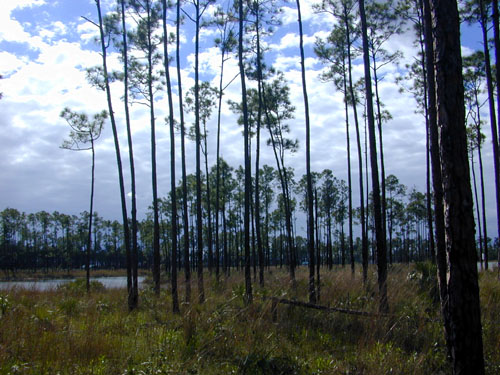
Wood, Nutting, and Hutchinson handled the things that turn a philosophy into a place. They acquired the original tract from a Brevard landowner. They negotiated the terms under which the AHF would hold the underlying acres. They recruited the first wave of homesteaders through School of Living mailing lists and Mother Earth News-adjacent periodicals of the era. They built the original Village Hall on cleared pine flatwoods. Borsodi himself only moved to Melbourne Village years later, living there from 1950 to 1960 and lending the project his name and his Wednesday-evening seminars before returning north.
The under-credited founders matter for two reasons. First: the durability of the village owes more to the practical 1947-1950 buildout than to the underlying philosophy, and that buildout was women’s work that the standard narrative tends to collapse into “Borsodi’s followers.” Second: the AHF organizational continuity Wood and Nutting established, with a self-funding parks-and-recreation function holding roughly 45 acres of common property, is what kept the land trust enforceable across three generations.
Incorporation in 1957 and the annexation defense
The town was not incorporated in 1946. For its first decade Melbourne Village was a private subdivision with restrictive AHF covenants and no municipal status. Incorporation came in 1957 under Florida Special Acts Chapter 57-1531, and the motivation was defensive: the City of Melbourne and the proposed City of West Melbourne were both expanding through annexation, and an unincorporated subdivision sitting between them was an obvious annexation target. Incorporation as a separate town was the legal mechanism to prevent absorption.
The 1957 incorporation gave Melbourne Village the authority to zone its own land, set its own building codes, and elect its own council. It did not give the town a property-tax base to fund full municipal services, which is why the contract-with-Melbourne model for fire, advanced public works, and certain utilities became the long-term arrangement. The choice was deliberate: maintain political autonomy and zoning control while outsourcing the expensive services that any 700-person town would struggle to provide independently.
The town’s population peaked at 1,004 in 1980 and has since drifted down. The 2020 federal census recorded 681 residents, making Melbourne Village the smallest incorporated municipality by population in Brevard County. The decline is mostly demographic, the original 1950s homesteading cohort aging out without an equivalent inflow, rather than any failure of the land-trust mechanism itself.
Surrounded but distinct
Melbourne Village is now completely surrounded by suburban Melbourne. Drive west on University Boulevard from FIT and you’ll cross into Melbourne Village without realizing it; the cues are subtle (suddenly older trees, longer driveways, more space between houses). The town has resisted multiple annexation attempts by the City of Melbourne, most recently in the 1990s when the city tried to fold the village into a larger municipal services district.
The political relationship is generally cooperative. Melbourne Village contracts with the city for many services (fire, advanced public works, certain utilities) but maintains its own zoning, council, and policing oversight. The relationship has been described by Melbourne Village officials as “satisfactory neighbor” rather than “subordinate enclave.”
What it means for Melbourne
Melbourne Village is the rare visible piece of mid-twentieth-century American intentional-community history that remains a functioning municipality. As a piece of Brevard County’s civic landscape, it represents a road not taken: a model of low-density wooded community with a land-trust governance structure that the rest of the county comprehensively rejected in favor of conventional subdivision development.
Worth visiting if you’re in Melbourne. Drive slowly along Lake Washington Road or University Boulevard in the western part of the city and you’ll see the difference: older houses on big lots, dense canopy, signs that say “Town of Melbourne Village,” a different feel from what surrounds it. Most visitors don’t know it’s there. It’s one of the more interesting things in Brevard County.
Sources
- Town of Melbourne Village, official municipal records and history page, accessed 2026-01-13. https://melbournevillage.org/
- School of Living, archive materials on Ralph Borsodi’s southern projects, accessed 2026-01-13. https://schoolofliving.org/
- Florida Memory Project, Ralph Borsodi at Melbourne Village photographs and papers, accessed 2026-01-13. https://www.floridamemory.com/
- Florida Special Acts of 1957, Chapter 57-1531, “An act to incorporate the town of Melbourne Village in the county of Brevard.”
- Borsodi, Ralph. Flight from the City (1933). Periodic later editions.
- American Homesteading Foundation, public records on land trust holdings and the approximately 45-acre common-property tract, accessed 2026-01-13.
- “Melbourne Village, Florida,” Wikipedia, on the 1947 arrival of Virginia Wood, Elizabeth Nutting, and Margaret Hutchinson; Ralph Borsodi’s 1950-1960 residency; 1957 incorporation; and US Census population figures (1960: 458; 1980 peak: 1,004; 2020: 681). https://en.wikipedia.org/wiki/Melbourne_Village,_Florida
Further Reading
As an Amazon Associate we earn from qualifying purchases.